
Why an ALTA Survey Matters Before Buying Near a Major Mixed-Use Project
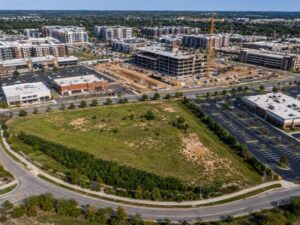
Large mixed-use developments change everything around them. Roads shift. Utility corridors move. New easements get recorded. If you are buying property near a project of that scale, getting an ALTA Survey before closing is not a formality. It is the most direct way to find out what you are actually buying.
The Survey That Goes Where Title Search Cannot
An ALTA Survey is the most thorough property survey available for commercial real estate. It follows standards set by the American Land Title Association (ALTA) and the National Society of Professional Surveyors (NSPS). These standards are updated every five years.
It goes far beyond a standard boundary survey. A licensed surveyor documents:
- Exact boundary lines and legal descriptions
- All easements and rights-of-way on or affecting the parcel
- Encroachments from neighboring properties or onto them
- Site improvements like buildings, paving, and parking areas
- Flood zone classification
- Access points and shared use agreements
- Above-ground utilities and evidence of use by outside parties
Title companies and lenders use this data to write comprehensive title insurance policies. Without it, they often add survey exceptions to the policy. That means certain risks stay uncovered after closing.
What a 500,000-Square-Foot Neighbor Does to Your Parcel
Big developments reshape the land around them. Infrastructure at that scale, roads, drainage corridors, utility lines, shared paths, affects neighboring parcels in ways that never show up on old surveys.
The Access Agreement You Did Not Know Was Recorded
When a large development gets built, municipalities often require road widening, utility relocation, or new drainage corridors. These changes can create new easements across adjacent land. If you buy before those easements are surveyed and recorded, you could close on a property with restrictions you never knew existed.
The Easement Running Through Your Future Building Footprint
Utility easements are common on parcels near active commercial development. A power line corridor or sewer easement can cut right through the area where you planned to build. An ALTA Survey locates these before you commit to a purchase price or a site plan.
The Fence Line That Is Not the Property Line
Construction on adjacent parcels sometimes leads to grading, fencing, or paving that crosses property lines. An encroachment caught before closing can be resolved through a boundary agreement or easement modification. Caught after closing, it becomes a legal dispute you have to fund yourself.
Five Ways Skipping This Survey Costs You Later
Buying without an ALTA Survey near a high-growth site is a costly calculation. Here is what you expose yourself to:
- Unrecorded easements that limit where you can build or what you can develop
- Encroachments from neighboring construction activity that you inherit at closing
- Title insurance gaps where the insurer excludes coverage because the survey was not done
- Lender requirements that delay or kill the deal when the survey is missing
- Zoning or setback conflicts that only surface after you have already started planning
Commercial property transactions carry survey risks by nature. Boundary disputes, easements not in public records, and access problems are common. Near a project with hundreds of thousands of square feet of new development, those risks multiply.
What You Own on Paper Versus What You Own on the Ground
An ALTA Survey gives you a clear picture of the property before you sign anything. It tells your lender what they need to finalize financing. It tells your title company what they need to issue a full policy without carve-outs. It tells you exactly what constraints your development project will face on day one.
Buying near a major mixed-use project without one is like drawing a floor plan before you know where the walls are. The survey does not slow down the deal. Finding a problem after closing does.
Development pipelines near large mixed-use sites move fast. Parcels get absorbed quickly. Getting your ALTA Survey done early puts you in a stronger position at every stage of due diligence, from site selection through financing to closing.
Frequently Asked Questions
What does an ALTA Survey show that a regular survey does not?
An ALTA Survey includes boundary lines, easements, encroachments, rights-of-way, flood zone data, site improvements, and evidence of use by outside parties. A standard boundary survey does not cover all of these. For commercial deals, lenders and title companies expect the full ALTA package.
Is an ALTA Survey required to buy commercial property?
Most lenders and title insurers require it before they will close a commercial transaction. Without it, title policies often include survey exceptions that leave buyers without full coverage on certain risks.
How long does an ALTA Survey take?
Timelines vary by property size and complexity. A straightforward commercial parcel can take one to three weeks. Properties near active construction or with multiple easements may take longer because of the additional research and fieldwork required.
Can I use an old survey instead of getting a new ALTA Survey?
Not reliably. Older surveys may predate easements, utility relocations, or boundary changes that have since been recorded. Near active development, conditions on and around a parcel can shift significantly within a short period. A current ALTA Survey reflects what is on the ground today.
Who orders the ALTA Survey, the buyer or the seller?
The buyer or their lender typically orders it during the due diligence period. Some sellers obtain one in advance to speed up the transaction, but this is less common. Your attorney or title company can confirm what your specific deal requires.
For a free land surveying quote, call us at (954) 519-7803 or send us a message by going here.