
As-Built Surveys for Completed Fiber Optic Improvements
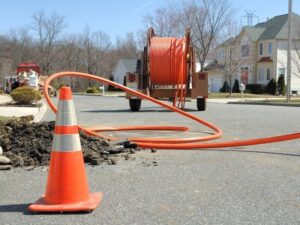 That’s exactly why accurate records matter. Once the conduit is buried, the only reliable way to find it again is a good as-built survey, which protects the network from future dig-ins and gives owners, contractors, and agencies the records they need for closeout and maintenance. Fiber goes in fast. A boring crew can push hundreds of feet of conduit in a day, and within weeks the surface looks like nothing happened.
Determining As-Built Survey Requirements for Fiber Optic Installations
An as-built survey records where infrastructure was actually installed, not just where the plans said it would go. On fiber projects, that usually means conduit routes, handholes, vaults, pedestals, and connections. The result becomes the official record of the installed network.
Requirements depend on who owns the right-of-way and who will maintain the fiber. A city, county, state agency, private developer, or utility owner may each want different data, formats, and accuracy. Requirements can vary by agency, municipality, county, and project scope, so ask for the as-built specifications in writing before work starts.
Get those details early. Some data, like conduit depth, is far easier to capture during construction than afterward. If permit closeout or payment depends on the as-built, plan survey visits into the construction schedule from day one.
Questions to answer before installation
- Who will receive and approve the as-built drawings
- Which coordinate system and datum to use
- Whether conduit depths must be shown
- Required file formats, such as CAD or GIS
- Deadlines tied to permit closeout or payment
Documenting Installed Fiber Routes and Underground Conduit Alignments
The conduit alignment is the path the conduit follows underground. The as-built survey shows that path in relation to roads, property lines, rights-of-way, and other utilities. Accurate alignments help future crews avoid hitting the line.
Timing makes a big difference. When conduit is placed in an open trench, the surveyor can measure it directly before backfill. Directional bores are harder, since the conduit is never exposed, so crews often rely on bore logs, tracer wire, or electronic locating to record the path.
Depth deserves its own attention. Bore depth can change along the route to pass under driveways, ditches, or other utilities. If depth is required, coordinate with the contractor so readings are taken and recorded at regular points as the work happens.
Locating Handholes, Vaults, and Aboveground Fiber Infrastructure
Handholes and vaults are underground boxes that give crews access to fiber for splicing, pulling, and maintenance. Handholes are usually smaller, while vaults are larger and may hold splice cases or equipment. Both need exact locations on the as-built.
The surveyor measures each structure’s position and often its lid elevation. Labels or ID numbers from the design should be matched to each structure in the field. That makes the drawing useful when crews need to find a specific splice point later.
Aboveground features belong on the drawing, too. That can include pedestals, cabinets, route markers, and fiber attached to utility poles. Recording them helps owners track the full network, not just the buried parts.
Verifying Installation Records Against Surveyed Field Conditions
Contractor records are a starting point, not a final answer. Redline drawings, bore logs, and field notes can contain errors or gaps. The as-built survey checks those records against measured field conditions.
Differences are common. A route may shift to avoid a utility conflict, or a handhole may land a few feet from its planned spot. The surveyor flags these changes so the final drawing shows reality instead of the design.
Review flagged items with the contractor and owner. Some differences may need an explanation or a note on the drawing. Others, like conduit placed outside the permitted right-of-way, may need follow-up with the agency.
Preparing Final As-Built Drawings for Utility Records and Maintenance
The final as-built drawing pulls everything together. It typically shows the conduit route, structures, depths if required, nearby features, and right-of-way. Labels, notes, and a clear legend help future users read it quickly.
Format matters for long-term use. Many owners want CAD files for engineering and GIS data for mapping their network. Using the same coordinate system across projects lets new segments line up with existing records.
Store the drawings where crews can find them. Utility owners often load as-built data into their mapping systems and share it with locators. Accurate records reduce dig-in damage, speed up repairs, and make network expansion easier to plan.
Frequently Asked Questions
What are as-built surveys for fiber optic projects?
As-built surveys record where fiber conduit, handholes, vaults, and related equipment were actually installed. They’re compared to the design to show any changes. Owners, agencies, and contractors use them for closeout and maintenance. They also help prevent future damage from digging.
Can a surveyor find conduit after it’s buried?
A surveyor can measure surface features and work with locating methods like tracer wire. Direct measurement of buried conduit is much easier before backfill. Directional bores rely more on bore logs and locating data. Planning survey visits during construction gives the most reliable results.
Do fiber as-built drawings need to show depth?
Some agencies and owners require depth, while others don’t. Depth can vary along a bore path. Recording it during installation is the most practical approach. Confirm depth requirements before construction starts.
For a free land surveying quote, call us at (954) 519-7803 or send us a message by going here.
Posted in constrcution survey | Tagged constrcution survey