
Construction Survey Checks Before Building Pads and Utilities Are Laid Out
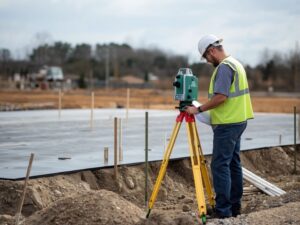
A construction survey does more than mark where a building goes. It checks the ground itself before pads get poured and pipes get placed. Skip these checks and a pad can end up at the wrong height. A utility line can end up crossing another one already buried nearby.
Here is the problem that causes the most delays. Staking gets done. But nobody checks pad elevation or looks for utility conflicts before work moves forward. Then a problem shows up once equipment is already on site. Everything stops.
Construction survey checks confirm the ground is ready before pads and utilities go in. Catching a problem at this stage costs far less than catching it after concrete or pipe is already in the ground.
Why a Pad Needs More Than Just Staking
Once a site gets staked, there is still work left before a pad is ready for concrete. The ground needs to be checked, not just marked with flags and stakes.
A survey crew checks the pad’s finished height against the approved grading plan using accurate site measurements. This confirms the pad sits at the right level compared to the street, nearby drainage, and other buildings around it. A pad poured even a few inches off from plan can cause water to pool near a foundation. It can also clash with the floor height set in the building design.
Checking the Ground Before Fill Gets Added
Before fill material gets dumped in to raise a pad to grade, the existing ground needs a check first. This confirms how much fill is actually needed. It also flags any low spot that could cause the ground to settle unevenly later.
Skipping this step means fill gets added based on a guess, not a real measurement. That guess can leave a pad slightly out of level. This becomes a much bigger problem once a foundation is already sitting on top of it.
Confirming Soil Has Settled the Right Way
Pad areas often need a certain level of soil compaction before construction can move forward. A survey crew works with the soil testing team to confirm the pad reaches the required height after compaction. Not just before it.
This step matters because compacted soil settles differently than loose fill does. A pad checked only before compaction can end up sitting lower than planned once the soil finishes settling into place.
What a Crew Confirms Before Digging Utility Trenches
Laying out utilities takes more than knowing where a pipe or line needs to run. It also means confirming the ground matches what the design plan assumed in the first place.
Checking Depth Along the Whole Trench, Not Just the Ends
A survey crew checks trench depth at several points along a utility run. Not just at the start and the end. This catches any spot where the ground does not match the design. That mismatch can happen if the original site survey missed a small dip or rise somewhere along the way.
A trench that ends up too shallow or too deep in one stretch can create a slope problem. This matters most for gravity fed lines like sewer pipes, which depend on a steady, planned slope to work the way they are supposed to.
Making Sure New Lines Do Not Clash With Old Ones
Before a trench gets dug, a survey crew confirms the planned line will not run into an existing line already buried nearby. This means checking both depth and side to side position. Two lines can cross at different depths without a problem. Or they can clash if the gap between them is too small.
This check matters even more on sites with a mix of new and older buried infrastructure. A new utility run often has to fit around lines that went into the ground years before the current project started.
Why Tight Commercial Lots Raise the Stakes for These Checks
Miramar has a mix of dense commercial development sitting on top of older buried infrastructure. A site with tight setbacks and a small buildable area leaves little room for error during pad and utility work.
A pad that sits even slightly off from its planned height on a tight commercial lot can push water toward a neighboring property line. That alone can create a compliance issue during inspection. Utility runs on these lots also have to route around existing lines with very little extra space to work with. This makes a careful depth and position check essential before any trench gets dug.
A Clear Order for Confirming the Site Is Ready
Following a set order for these checks helps catch problems early, while they are still cheap to fix.
- Check the pad subgrade before fill material gets added.
- Confirm compaction meets the required density after fill goes in.
- Recheck the finished pad height against the approved grading plan.
- Confirm trench depth at several points along each utility run.
- Check for conflicts between new lines and existing ones before digging starts.
Skipping a step in this order does not make the risk go away. It just delays the moment someone finds the problem, usually at a point in construction where it costs a lot more to fix.
What to Ask Before Pad and Utility Work Starts
A few direct questions can catch a gap before it turns into a real delay.
- Has the pad subgrade been checked against the grading plan?
- Will compaction get checked again after fill is placed, not just before?
- Have trench depths been confirmed at several points, not only at the start and end?
- Has the crew checked for conflicts with utility lines already buried nearby?
Clear answers to these questions before work starts lower the chance of a costly surprise once pads and utilities are already in the ground.
Frequently Asked Questions
What Is the Difference Between Site Staking and Pad Elevation Verification?
Site staking identifies where a building pad or structure should be located. Pad elevation verification confirms that the prepared ground reaches the correct height based on the approved grading plan. These are separate steps performed at different stages of construction.
Why Should Existing Ground Elevations Be Checked Before Adding Fill?
Checking existing elevations before fill placement shows the actual amount of material needed and identifies low areas that may require correction. Without this step, fill decisions are based on estimates instead of measured site conditions.
How Does Soil Compaction Impact Final Pad Elevations?
Compacted soil behaves differently from loose fill and can settle over time. Checking elevations after compaction helps confirm that the finished pad remains at the required height and matches the project grading requirements.
Why Are Utility Trench Depth Checks Performed at Multiple Locations?
Utility routes can cross areas with different ground conditions and elevation changes. Measuring trench depth at multiple points confirms that the installed utilities follow the design and identifies sections that may need adjustment.
What Happens When a New Utility Line Conflicts With Existing Underground Utilities?
A utility conflict check compares the planned line location and depth with existing underground infrastructure. Finding conflicts before excavation begins helps prevent redesigns, delays, damage, and unexpected repair costs.
For a free land surveying quote, call us at (954) 519-7803 or send us a message by going here.
Posted in land surveying, land surveyor | Tagged Construction Survey, Construction Staking