
House Stakeout Before Building on a Narrow Residential Lot
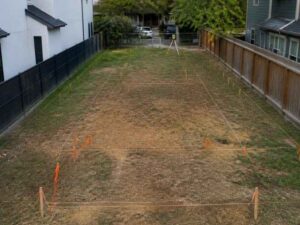
A narrow lot does not leave much room for mistakes. A few inches in the wrong spot can push a home too close to the side yard, cross a setback, or crowd a neighbor’s property.
This is where a house stakeout comes in. It marks the exact building points on the ground before construction begins. On a narrow lot, this step matters even more than usual.
This article explains why tight lots raise the stakes, what a proper stakeout involves, and what can go wrong if the layout is off.
Tight Lot Dimensions Leave Less Room for Layout Error
A wide lot can absorb small errors. A narrow lot cannot. When the side yards are already tight, there is very little space left to work with.
Many lots sit on standard suburban dimensions, and some are narrower than others due to how the neighborhood was originally platted. On these lots, a house has to fit within tight setback lines on both sides. If the layout shifts even a few inches, the home can end up too close to the property line.
This creates real problems. A house built too close to a side yard may violate zoning rules. It may also block normal access between the home and the fence line, which some homeowners need for lawn equipment, utility work, or storage.
Driveways face the same pressure. On a narrow lot, the driveway often needs to fit beside the house without eating into the required setback. A stakeout marks these lines clearly so the layout stays within bounds from day one.
Why Small Errors Cause Big Problems Later
A layout error found after the foundation is poured is far more expensive to fix than one caught before digging starts. This is the main reason a careful stakeout matters so much on a tight lot.
Property Corners and Building Lines Guide the Stakeout
A stakeout is not a guess. It starts with verified property corners, not assumed ones. A surveyor confirms the true boundary using the recorded plat, prior surveys, and physical evidence in the field. Construction staking before building then transfers the approved site plan onto the ground so the crew can follow the correct building lines, setbacks, and foundation location.
This includes the required setbacks on all sides, any easements that affect where the home can sit, and the exact footprint approved during permitting. Each of these lines gets marked with stakes, flags, or other clear markers that the construction crew can follow.
Skipping this step, or relying on an old survey, risks building from bad information. A shifted boundary line, even a small one, can throw off the entire layout on a narrow lot.
Why Easements Matter So Much Here
Utility and drainage easements often run along the sides or rear of a lot. On a narrow property, this can eat further into the buildable area. A stakeout accounts for these lines so the house does not end up built partly inside a restricted zone.
Foundation Positioning Matters More on Constrained Sites
Once the corners and lines are set, the next concern is the foundation itself. On a spacious lot, a small positioning error might go unnoticed. On a narrow lot, it rarely does.
A foundation set too close to one side can reduce the required clearance below what the city allows. It can also limit access along that side of the house, which matters for maintenance, drainage, or future repairs.
Drainage is a common concern in most areas. If the foundation shifts even slightly, water flow around the home can change in ways the original grading plan did not account for. This can lead to pooling near the foundation or runoff onto a neighbor’s property.
The relationship between the new home and the house next door also matters. A foundation placed incorrectly can create uneven spacing between structures, which looks off and may raise questions during final inspection.
Why Precision Protects the Builder Too
A contractor who builds from a verified stakeout has a clear record showing the foundation matched the approved plan. This protects against disputes if a neighbor or inspector raises a concern later.
Site Features That Can Complicate a House Stakeout
Several site conditions can make a stakeout more difficult on a narrow lot. Knowing these in advance helps keep the project on schedule.
Fences. An existing fence may not sit exactly on the property line. If the stakeout relies on the fence instead of verified survey data, the layout can be off from the start.
Retaining walls. Walls built for grading or drainage purposes can restrict where stakes can be placed and where equipment can safely move.
Utilities. Buried lines or above-ground equipment near the property line may limit how close construction can get without special precautions.
Slopes. Even mild grade changes affect how a foundation sits relative to drainage and adjoining properties.
Existing structures. Sheds, driveways, or other improvements close to the boundary can narrow the usable work area even further.
Limited equipment access. Narrow side yards sometimes cannot fit standard equipment, which can affect how excavation and staking are sequenced.
Addressing these issues early, before the crew mobilizes, keeps the stakeout process from causing delays once work begins.
Construction Checks Help Keep the House Within the Approved Layout
A stakeout is not a one-time event. On a narrow lot, it helps to verify key points again as construction moves forward.
Checking the layout during excavation confirms the dig matches the approved plan before footings go in. A second check at the footing stage confirms the foundation lines are accurate before concrete is poured. These checks catch problems while they are still easy and affordable to fix.
Waiting until the foundation is complete to discover an error is far more costly. On a tight lot, where there is little room to adjust, this kind of check is worth the extra step.
Requirements for staking verification can vary by contractor, municipality, and project scope. If your build depends on a tight timeline, confirm your stakeout and inspection schedule with your surveyor early, so delays do not creep into the construction schedule.
For a free land surveying quote, call us at (954) 519-7803 or send us a message by going here.
Posted in land surveying, land surveyor | Tagged construction staking