
ALTA Survey vs Boundary Survey: Key Differences
 The building may look ready to use. The parking lot may seem large enough, and the location may also seem perfect for a business or future project.
However, problems can hide below the surface.
A buyer may later learn that part of the driveway crosses another property. A utility easement may block future construction plans. Parking spaces may not sit fully inside the lot lines. In some cases, title records may show issues the owner never expected.
That is why many buyers order an ALTA Survey instead of relying only on a regular boundary survey.
At first glance, the two surveys may look similar. Still, an ALTA Survey often shows much more information that can affect a commercial property purchase. For commercial buyers, lenders, attorneys, and title companies, those extra details can make a major difference before closing day.
What Is the Difference Between an ALTA Survey and a Boundary Survey?
An ALTA Survey shows more than property lines. It also reviews easements, access, utilities, improvements, and title-related issues tied to commercial property. A regular boundary survey mainly confirms boundary lines and corners.
A regular boundary survey helps identify where a property begins and ends. It shows corners, lines, and measurements. Many homeowners use this type of survey before building a fence, adding a shed, or settling a property line concern.
For smaller residential projects, that level of detail may work well.
However, commercial properties often involve more risk. Buyers may deal with shared driveways, utility lines, parking lots, access agreements, and title requirements. Because of that, lenders and title companies usually want more than basic boundary information.
That is where an ALTA Survey becomes important.
Unlike a regular boundary survey, an ALTA Survey combines fieldwork with title research. It follows standards created by the American Land Title Association (ALTA) and the National Society of Professional Surveyors (NSPS). As a result, buyers receive a clearer picture of the property and the risks tied to it.
What Does an ALTA Survey Show Beyond Property Lines?
An ALTA Survey may reveal easements, shared driveways, parking concerns, encroachments, utility locations, and access rights that a regular boundary survey may not fully document.
For example, an ALTA Survey may identify:
- Easements affecting future construction
- Shared access agreements
- Utility line locations
- Encroachments crossing property lines
- Parking layout concerns
- Building placement issues
- Flood zone observations
- Title-related conflicts
Because of this, commercial buyers often use an ALTA Survey during real estate closings, refinancing, redevelopment projects, and lender reviews.
In many cases, the survey helps uncover issues before money changes hands. That early discovery can save buyers from costly delays, redesigns, or legal disputes later.
Why Easements Matter During Commercial Property Purchases
Easements can limit where owners build, expand parking, place utilities, or develop commercial property. An ALTA Survey helps identify recorded easements before closing so buyers can avoid unexpected problems later.
Many buyers focus on the building itself. However, easements can create major issues that affect future plans.
An easement gives another party legal rights to use part of the property. Utility companies, nearby owners, or local agencies may hold those rights.
For example, a buyer may plan to expand a parking lot behind a retail building. Then the ALTA Survey may reveal a drainage easement running through that exact area.
Without the survey, the buyer may not discover the issue until construction begins.
That delay can cost time and money. In some situations, it may even force the owner to redesign the entire project.
An ALTA Survey helps buyers spot these problems early. As a result, they can adjust plans before closing on the property.
How Access Problems Can Delay a Commercial Closing
Commercial properties need legal and documented access. An ALTA Survey helps confirm driveways, shared entrances, and cross-access agreements before a sale moves forward.
Legal access matters more than many buyers realize.
A property may look easy to enter from the street. Still, the legal right to use that access may not exist the way buyers expect.
For example, some commercial sites share driveways with nearby businesses. Others rely on cross-access agreements recorded years ago. Older properties may also contain outdated records or unclear legal descriptions.
If those records contain problems, lenders may pause the transaction until the issue gets resolved.
An ALTA Survey helps confirm how vehicles and people legally enter the property. It may also show shared access routes or areas where agreements need review.
That information becomes very important for shopping centers, office sites, restaurants, warehouses, and industrial properties.
Why Encroachments Create Risk for Buyers
Encroachments happen when fences, parking lots, signs, or buildings cross property lines. An ALTA Survey helps identify these problems early so buyers can avoid disputes and unexpected costs.
For example, a fence may sit on the neighboring property. A sign, sidewalk, retaining wall, or parking area may also cross the boundary.
Commercial properties face these problems more often because they contain larger improvements and more paved areas.
In some situations, buyers discover that parking spaces extend outside the legal property lines. That issue may affect zoning requirements, tenant use, insurance concerns, or overall property value.
An ALTA Survey helps document visible improvements and their locations. Because of that, buyers can identify concerns before they become expensive legal disputes after closing.
How ALTA Surveys Help Title Companies Reduce Risk
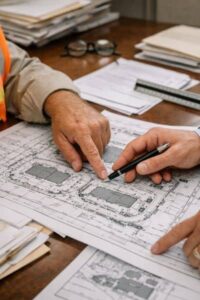 Title companies use ALTA Surveys to compare physical site conditions against legal property records. This process helps identify easements, encumbrances, access agreements, and title exceptions that could affect ownership rights.
Title companies want to protect buyers and lenders from future ownership problems. That is why they often request an ALTA Survey during commercial transactions.
The survey works together with the title commitment to review both the property itself and the legal records connected to it.
For example, the survey may identify:
- Recorded easements
- Access agreements
- Encumbrances
- Exceptions listed in title records
- Utility rights
- Overlapping property concerns
This process helps buyers understand what affects the property before closing day.
Without that information, hidden issues may appear after the purchase becomes final. In many commercial deals, discovering those problems later can become far more expensive than addressing them during due diligence.
What Are Table A Items in an ALTA Survey?
Table A items are optional features added to an ALTA Survey based on project needs. They help buyers, lenders, and attorneys gather additional information about the property before closing.
ALTA Surveys also include optional features called Table A items. Not every property requires the same level of detail. However, many commercial buyers request these items for added protection and planning.
For example, Table A items may include:
- Parking counts
- Building dimensions
- Utility observations
- Flood zone information
- Address confirmation
- Access details
These details become especially useful during redevelopment projects, refinancing, tenant improvements, or future site upgrades.
For older commercial properties, Table A items may also help reveal issues tied to outdated layouts, shared parking areas, or changes made years earlier.
When a Boundary Survey May Still Be Enough
A regular boundary survey may work for smaller residential projects like fences, sheds, or simple property line questions. However, commercial properties often require ALTA Surveys because they involve greater financial and legal risk.
Not every property needs an ALTA Survey.
For example, a homeowner installing a backyard fence may only need a regular boundary survey. Small residential projects often require less detail and fewer title-related reviews.
However, commercial properties usually involve higher costs and more complicated site conditions.
A buyer may spend large amounts on renovations, tenant improvements, financing, or redevelopment work. Because of that, missing information can create serious problems later.
That is why many commercial buyers choose an ALTA Survey early in the process instead of waiting until issues appear during closing.
An ALTA Survey Helps Buyers Make Better Decisions
Commercial real estate deals involve more than buildings and land. Buyers must also understand access, easements, title records, utilities, and site conditions before moving forward.
A regular boundary survey helps confirm property lines. However, an ALTA Survey often reveals much more.
It can uncover risks tied to development plans, parking, utilities, shared access, encroachments, and ownership records. More importantly, it helps buyers spot problems before closing instead of after construction begins.
For many commercial properties, that extra information brings peace of mind and helps buyers move forward with greater confidence.
For a free land surveying quote, call us at (954) 519-7803 or send us a message by going here.
Posted in land surveying, land surveyor |