
Construction Staking Explained: Why Builders Need Surveyors Before Work Begins
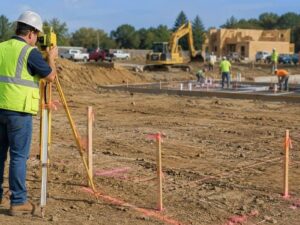
Construction staking helps builders place structures in the correct spot before work starts. A surveyor places markers on the property to show where buildings, driveways, utilities, and other improvements should go. Without construction staking, builders can make mistakes that lead to delays, failed inspections, and costly repairs.
What Is Construction Staking?
Construction staking is a surveying service that places markers on a property to guide builders during construction. These markers show the exact location of planned structures and improvements.
Construction staking is an important step before building begins. A land surveyor uses approved plans to mark locations on the ground.
These markers help construction crews know where to build.
Construction staking is often used for:
- Houses
- Garages
- Driveways
- Parking lots
- Sidewalks
- Retaining walls
- Utility lines
- Roads
- Drainage systems
Without staking, builders may rely on rough measurements. That increases the chance of mistakes.
Why Builders Need Surveyors Before Construction Starts
Surveyors help builders place structures correctly before construction begins. Construction staking lowers the risk of boundary problems, failed inspections, and costly errors.
Many building problems happen because structures were placed in the wrong location.
A surveyor helps prevent that from happening.
Property Line Problems
Buildings placed too close to property lines can create legal issues with neighbors.
Cities and counties also have setback rules. These rules control how close a structure can be to a property line or road.
If the structure is in the wrong spot, it may need to be moved.
Foundation Mistakes
A small error in foundation placement can affect the entire project.
Walls, plumbing, drainage, and utilities all depend on accurate measurements.
Utility Conflicts
Construction staking helps crews avoid underground utility lines and easements.
This lowers the risk of damage during construction.
Failed Inspections
Inspectors compare the finished work to approved plans.
If the structure is not placed correctly, inspections may fail.
How Construction Staking Works
The process is straightforward, though the precision involved is anything but.
First, the surveyor reviews the site plan and construction drawings to confirm measurements, setbacks, and elevations. Then the survey crew visits the property and locates existing boundary markers or survey control points. From there, they place stakes and markers at every key position the construction crew will need.
On larger or more complex projects, surveyors return at different phases to verify that construction is tracking correctly against the plan.
What Happens If Construction Staking Is Skipped?
Skipping construction staking can lead to boundary disputes, failed inspections, drainage problems, and expensive repairs later.
Some people try to save money by skipping staking services.
That decision can create bigger problems later.
Boundary Disputes
A structure may accidentally cross onto a neighbor’s property.
This can lead to legal disputes or forced removal of the structure.
Drainage Problems
Incorrect grading can cause water to collect near buildings.
Poor drainage may damage foundations and landscaping.
Permit Delays
Some local governments require staking verification before inspections can continue.
Expensive Rework
Moving concrete, utilities, or retaining walls after installation can cost thousands of dollars.
Construction Staking for Residential Projects
Residential construction staking helps homeowners place structures correctly before building begins.
Homeowners often need staking for:
- New homes
- Garages
- Pools
- Home additions
- Decks
- Retaining walls
- Large driveways
Even smaller projects can create problems if measurements are wrong.
For example, a garage built too close to a setback line may fail inspection.
Construction Staking for Commercial Projects
Commercial staking is more involved because the projects are larger and the stakes (in every sense) are higher. Surveyors help position buildings, roads, parking lots, storm drainage systems, utilities, and site grading according to approved plans. Surveyors on big commercial jobs often return several times during the build.
How to Choose the Right Surveyor
Look for someone licensed in your state, that’s a baseline requirement, not a bonus. Local experience matters too: a surveyor who works regularly in your area knows the local permit rules, setback requirements, and common site conditions. Construction experience is worth asking about specifically, since it’s a different skillset from boundary or topographic work. Modern GPS equipment and digital mapping tools add another layer of accuracy.
The right surveyor isn’t expensive compared to fixing a structure that went in the wrong place. Get staking done before construction begins.
For a free land surveying quote, call us at (954) 519-7803 or send us a message by going here.
Posted in land surveying, land surveyor |